Identifying the Signs of a Bad Car Battery vs Alternator
Your dashboard lights are flickering. Your headlights seem dimmer than usual. Yesterday your car started fine, but this morning it barely cranked over. You mention it to your brother-in-law, and he says, "sounds like your battery." Your coworker says, "that's definitely the alternator." The guy at the parts store suggests it could be either one.
So which is it?
Here's the frustrating part: your battery and alternator work so closely together that when one starts failing, the symptoms often look identical. We see Michigan drivers deal with this confusion constantly. Someone drops $150 on a new battery, drives fine for a week, then they're right back where they started. Or they ignore the warning signs thinking it's just a weak battery and end up stranded on their way home from work.
At Auto DR, we've diagnosed hundreds of these electrical issues throughout Macomb and St. Clair Counties. Once you understand the signs of a bad car battery vs alternator, you can figure out what's actually wrong and avoid wasting money replacing the wrong part.
Understanding How Your Battery and Alternator Work Together
Before we get into symptoms, here's the basic setup. Your car battery gives you the initial jolt of power needed to start your engine. Once the engine's running, your alternator takes over. It generates electricity to keep everything powered while also recharging your battery for the next start.
Think of it this way: your car battery is like your phone's battery, while your alternator is the charger plugged into the wall. When your battery dies, you can't start your car. When your alternator fails, your battery can't recharge. So you're basically running on whatever charge is left until it's gone.
This is exactly why battery and alternator problems look so similar. A failing alternator slowly drains your battery, making you think the battery's the problem. Meanwhile, a dead battery might prevent you from even noticing alternator issues because your engine won't run long enough for those symptoms to show up.
Signs of a Bad Alternator
Your alternator rarely dies without any warning signs. Most of the time, you'll get multiple clues before complete failure—if you know what to look for. Here are the most common signs of a bad alternator.
Dashboard Battery Light (or ALT Light)
That battery warning light on your dashboard? It's actually your alternator warning light. When this comes on while you're driving, your charging system has stopped working properly. This is one of the clearest early warning signs you'll get.
Dimming or Flickering Lights
Do you notice your headlights dimming when you're sitting at a red light on Hall Road or waiting in the McDonald's drive-through? That's your alternator struggling to keep up. You might also see your dashboard lights pulsing brighter and dimmer as you speed up and slow down. Interior lights that flicker are another dead giveaway.
Electrical Accessories Acting Weird
Modern cars are loaded with electrical stuff—power windows, radio, heated seats, backup cameras. When your alternator can't keep up, these are the first things to suffer. Watch for power windows moving slower than usual, your radio cutting out randomly, or your backup camera getting all fuzzy.
Whining or Grinding Noises
A failing alternator often makes noise before it quits completely. You might hear a whining sound that gets louder when you rev the engine, or grinding from worn bearings inside. These sounds come from the alternator area and sometimes come with a burning rubber smell if your serpentine belt is slipping.
Dead Battery After Short Drives
Here's one that really confuses people: you drive to the store, park for 20 minutes, and your car won't start. You jump it, drive home, and the next morning it's dead again. This pattern screams alternator failure. Your battery has just enough charge to start the car, but the alternator isn't putting anything back in, so you're stuck in this frustrating loop.
Battery Keeps Dying Despite Being New
If you just replaced your battery and it keeps dying, don’t buy another new battery. The problem is almost definitely your alternator. A new battery with a bad alternator will die just as fast as an old one. You're just treating the symptom instead of fixing the actual problem. This is why our electrical system diagnostics test both components together.
Engine Stalls While Driving
This is dangerous and needs immediate attention. If your car dies while you're driving, especially on the highway, your alternator has probably failed completely. At this point, you're running purely on whatever battery power is left. You most likely need an alternator replacement.
🚨 STOP DRIVING: If your vehicle stalls while driving, pull over safely and call for a tow. Don't try to restart your car and keep driving.
Signs of a Bad Car Battery
Battery failure has its own pattern of symptoms. While some overlap with alternator issues, several signs point pretty clearly to battery problems.
Slow Engine Crank
When you turn the key and you hear a slow, tired crank instead of a quick, confident turnover—that’s the classic sign of a dying car battery. This slow crank is especially noticeable on cold Michigan mornings, when batteries naturally have less power.
Clicking Sound With No Start
If you turn the key and all you hear is rapid clicking, that means your car battery is so drained that it can't even engage the starter motor. The clicking comes from the starter solenoid trying to activate but not having enough juice to get the job done.
Complete Electrical Failure
When you turn the key and absolutely nothing happens—no lights, no dashboard, no sound at all—you should check your battery connections first. If connections look tight and clean, you probably have a completely dead battery or severely corroded terminals preventing power flow.
Swollen or Bloated Battery Case
Take a look at your battery. Does it look puffy or swollen compared to when it was new? Heat causes battery cases to swell, which means there's internal damage happening. A swollen battery needs a replacement right away because it can leak acid or even rupture.
Corroded Battery Terminals
See heavy white, green, or blue crusty buildup around your battery posts? That's corrosion. While cleaning the terminals sometimes helps temporarily, heavy corrosion usually means the battery is leaking and failing inside. Road salt during the winter makes this corrosion even worse.
Battery Age Over 3-5 Years
Check the date stamped on your battery case. Most car batteries last 3-5 years in our climate. If yours is getting close to or past that age and you're having any starting issues, age is probably your answer. During your next oil change, it's worth having us check the battery's condition.
Electrical Issues Improve After Idling
If your electrical problems get better after letting your car idle for a few minutes, your battery is weak but your alternator is working. The alternator is successfully charging the battery, it just takes time because the battery is in rough shape.
Battery vs. Alternator: How To Tell the Difference
Sometimes symptoms overlap so much that it's hard to know which one is the problem. This comparison should help you narrow it down.
It's Probably Your Battery If:
- The engine cranks really slowly but does eventually start, and once it's running, everything works fine.
- Jump starting fixes things, at least for a while.
- The problem is worse on cold mornings.
- Your battery is 3-5+ years old.
- You can jump start your car and drive home without any issues.
- The battery light stays off while you're driving.
- Most problems happen when starting, not while driving.
It's Probably Your Alternator If:
- The engine starts okay but then dies shortly after.
- Your battery warning light comes on while driving.
- Lights progressively get dimmer as you drive.
- Electrical stuff works poorly when the engine is running.
- Jump starting only helps temporarily, but you need another jump soon after.
- You just replaced your battery but the problems keep happening.
- The car actually dies while you're driving.
- You smell burning rubber or hear grinding noises.
- Problems get worse while driving, especially at night with your headlights on.
It Might Be Both If:
- You've been driving with a bad alternator for weeks or even months.
- You've needed multiple jump starts over an extended period.
- Your battery is old and you're seeing charging system symptoms.
- You've noticed things getting progressively worse over several months.
When both fail, it's usually because a bad alternator killed a battery that was already getting weak or a dying battery put so much strain on a bad alternator that was barely hanging on that it finally gave up.
How To Check if Your Battery or Alternator Is Bad
Professional testing is always the most accurate, but you can do some basic checks at home to figure out what you're dealing with.
Start With a Visual Check
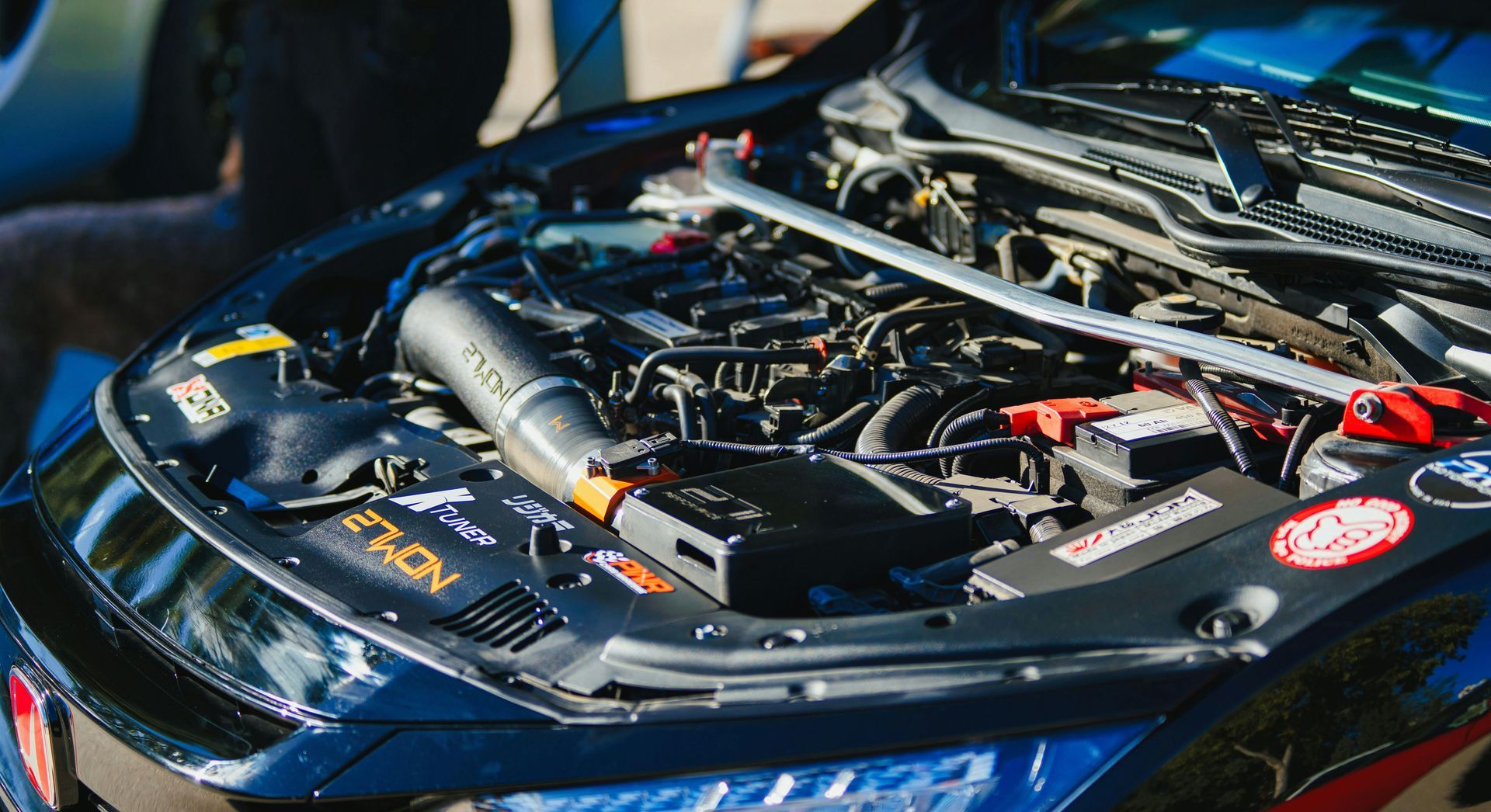
Pop your hood and take a look around your battery and alternator area. You're looking for obvious problems like corroded or loose battery terminals, a swollen or cracked battery case, a frayed or cracked serpentine belt, or visible damage to the alternator or wiring. If you spot any of these, you've found at least part of your problem.
Try the Headlight Test
This one's simple. Start your car and turn on your headlights. Watch how bright they are, then while your car is in park rev the engine to about 2,000 RPM.
If your alternator is healthy, the headlights should stay consistently bright or maybe get a tiny bit brighter at higher RPM. If your alternator is struggling, the headlights will dim when you're idling and brighten when you rev. That's a sign it can't keep up at low RPM.
Check Battery Voltage (If You Have a Multimeter)
Got a multimeter? With the engine off, a healthy battery should read 12.4-12.7 volts. Anything below 12.4 means your battery is discharged or weak
.
Now start the engine. The voltage should jump to 13.7-14.7 volts. That higher reading means your alternator is charging. If you're seeing below 13.7 or above 15 volts with the engine running, something's wrong with your alternator or voltage regulator.
Don't Do the "Disconnect the Battery" Test
You might have heard about disconnecting your battery while the engine runs to test the alternator. Don't do this! This old-school test can cause voltage spikes that fry sensitive electronics—your engine computer, airbag modules, all that expensive stuff. The risk isn't worth it.
When You Need Professional Testing
These basic tests give you clues, but they can't tell you everything. They won't show whether your alternator is charging properly under load, if something is draining your battery overnight, whether your battery's cold cranking amps still meet spec, or if voltage regulator problems are slowly damaging your electrical system.
For real answers, you need professional equipment. Ourelectrical diagnostics go way beyond basic voltage checks. We test everything under real-world conditions to find out exactly what's failing and why.
Can a Bad Alternator Drain a Battery?
This question comes up a lot, and the answer is "sort of, but not in the way you'd think."
How Bad Alternators Kill Batteries
A failing alternator doesn't usually "drain" your battery like leaving your headlights on would. But it absolutely can kill your battery in a few different ways.
Undercharging is the most common. When your alternator can't make enough voltage, your battery never fully recharges. Every time you start your car, you use some battery power. If the alternator isn't putting that power back in, it adds up. Eventually, your battery becomes completely dead.
Overcharging is less common but more dangerous. If your voltage regulator fails, the alternator can pump too much voltage into your battery. This literally boils the battery fluid and causes permanent damage.
A constant excessive load happens when your struggling alternator forces your battery to help power your car's electrical systems. This constant cycle of draining and attempting to recharge wears out your battery way faster than normal.
The Slow Death Spiral
Here's how it usually plays out: your alternator starts failing gradually. For weeks or even months, it's undercharging your battery by just a little bit. You might not notice anything wrong. But eventually, the battery gets so weak that it can barely start your car. At this point most people think that they need a new battery.
So you replace the battery, and everything seems fine for a week or two. Then the new battery starts acting up too. Why? Because the alternator was the real problem all along. The new battery is getting the same treatment the old one got.
This is why we test both components together during our electrical diagnostics. We see this scenario constantly—someone's on their second or third battery in a year because nobody checked the alternator.
Parasitic Drain Is Something Different
It's worth mentioning that parasitic drain is different from alternator problems. Parasitic drain is when something in your car keeps drawing power after you turn everything off, like a stuck relay, a glove box light that won't shut off, or a faulty module.
These drains kill your battery overnight even with a perfectly good alternator. If you're consistently waking up to a dead battery, parasitic drain could be the culprit. We can track these down with specialized testing.
When To Replace Your Car Battery or Alternator
Knowing the symptoms is helpful. Knowing when to actually do something about them keeps you from getting stranded.
Battery Replacement Timing
⏱️ Get your battery replaced if:
- It's 3-5+ years old and showing any weakness.
- The case looks swollen, cracked, or you see leaking.
- It fails a load test even after a full charge.
- The terminals are heavily corroded even after cleaning.
- You've jump started it multiple times recently.
Here's the thing about dying batteries—they don't get better. You might squeeze out a few more starts, but is saving $150 worth getting stranded at work or having your kids stuck at school pickup? Probably not.
Alternator Replacement Urgency
⚠️ Get your alternator replaced if:
- The battery warning light stays on while driving.
- Professional diagnostic testingshows your charging output is below spec.
- You hear grinding or whining from the alternator area.
- Voltage tests show undercharging or overcharging.
- Your battery keeps dying despite being new.
Alternator problems don't fix themselves. That dimming light today becomes a dead car tomorrow. Once you're seeing symptoms, a replacement is usually your best bet. Our alternator repair and replacement services can get you back on the road quickly.
When Both Need To Be Replaced
In a lot of cases, especially if symptoms have been going on for months, both components need a replacement. A failing alternator damages batteries. Weak batteries strain alternators. It's a vicious cycle.
We'll test both and give you straight answers about what actually needs to be replaced, not what would be convenient to sell you.
When You Should Give Us a Call
Look, some situations you can handle yourself. Others need professional help. Here's when you should reach out:
You've jump started your car multiple times this week. Stop the cycle. Repeated jump starting can damage both your battery and alternator—and you're one failed start away from being stuck somewhere.
Your battery is less than a year old but acting up. New batteries don't fail unless something else is killing them. Usually that something is your alternator or a parasitic drain.
You smell burning or see smoke. Any burning smell near your battery or alternator needs immediate attention. Electrical fires are rare, but they're also not something you want to mess around with.
Your warning lights are on while driving. That battery light isn't just for show. It's telling you that your charging system has failed. Pull over safely and call for help.
You're not sure what the problem is. Sometimes the symptoms are confusing or intermittent. Professional testing removes the guesswork. We'd rather spend 30 minutes properly diagnosing your car than have you waste money replacing parts that aren't the problem.
We serve families throughout Macomb and St. Clair Counties—from Richmond and Marine City to Macomb, Chesterfield, and Harrison Township. Whether you need a simple battery replacement or we need to dig deep to find the issue, we'll figure it out and get you back on the road.
Every repair we do is backed by our 36-month/36,000-mile warranty. That's how confident we are in our work.
Call Auto DR at (586) 271-6466 to schedule your electrical system diagnostic. We'll figure out exactly what's failing, whether it’s your battery, alternator, or both, and get you sorted out.
Frequently Asked Questions About Battery and Alternator Problems
How long can I drive with a bad alternator?
Once your alternator completely fails, you're running on battery power alone. Depending on how good your battery is and what you have turned on (lights, heater, radio), you might get anywhere from 30 minutes to maybe 2 hours. But here's the thing—you shouldn't be trying to find out. A bad alternator can damage other expensive electrical parts, and there's a good chance you'll end up stranded somewhere you don't want to be. If you think your alternator is failing, get to a repair shop right away or call for a tow.
Will a bad battery ruin an alternator?
Yeah, it actually can. When your battery is weak and can't hold a charge, your alternator has to work overtime trying to charge it while also powering all your car's electrical stuff. This constant overload wears out your alternator faster, especially the voltage regulator and internal diodes. This is why we always test both together. If you only fix one without checking the other, the replacement part might not last long.
Why does my battery keep dying overnight?
If your battery consistently dies overnight, there are three main suspects. First, an electrical component is staying on when it shouldn't. Second, your alternator might not be fully charging your battery when you drive. Third, the battery itself might be old or damaged and just won't hold a charge anymore. Our electrical diagnostics tests for all three issues to find out exactly what's draining power while your car sits.
Can I replace just the alternator without replacing the battery?
Yes, if your battery is still in good condition. During our diagnostic process, we test both components separately. If your battery is less than 3 years old, holds a charge properly, and passes our load test, you can replace just the alternator. However, if your battery is older or has been damaged by prolonged alternator issues, replacing both components together prevents future problems and gives you the best long-term reliability.
How much does it cost to replace an alternator vs a battery?
A battery replacement usually runs $100-200 depending on what your car needs and what quality battery you choose. An alternator replacement is typically hundreds of dollars more when you include parts and labor, depending on your vehicle. But here's what matters more than the price: getting the right diagnosis. If you spend $150 on a battery when you actually need an alternator, you're just going to spend another hundreds more on the alternator soon anyway, plus you wasted money on the battery. Our testing makes sure we replace only what's actually broken.
Can cold weather cause alternator problems?
Cold weather is harder on batteries than alternators, but alternators can struggle in extreme cold. When temperatures drop, engine oil thickens, making your engine harder to crank. This increased load stresses your alternator. Additionally, you're using more electrical accessories in winter—heated seats, defrosters, headlights—which demands more from your charging system. An alternator that's marginal in summer might fail when winter demands exceed its weakened capacity. This is why comprehensive electrical system inspections before Michigan winters can prevent mid-season failures.
How do I know if my alternator is charging my battery?
The simplest check is monitoring your dashboard warning lights. If the battery light is off while driving, your alternator is charging. For more precise verification, measure battery voltage with a multimeter. With the engine off, your battery should read 12.4-12.7 volts. Start your engine and the voltage should immediately jump to 13.7-14.7 volts. This higher voltage proves your alternator is generating power and charging your battery. If the voltage stays at 12.7 or below with the engine running, your alternator isn't charging. Professional testing goes further, measuring amperage output and voltage stability under various loads.
What happens if you keep driving with a bad battery?
Driving with a weak battery forces your alternator to work constantly at maximum output trying to keep your electrical systems running. This excessive load accelerates alternator wear and can lead to premature alternator failure. You also risk getting stranded—a failing battery becomes increasingly unreliable and will eventually refuse to start your vehicle, often at the worst possible moment. If you know your battery is weak, replace it right away. The cost of a new battery is far less than the inconvenience of being stranded or the expense of replacing both the battery and an alternator damaged by compensating for battery failure.
Can AutoZone or other parts stores accurately test my alternator and battery?
Parts stores offer free battery and alternator testing, which can provide basic information about whether these components are functioning. However, these tests are typically performed with the components removed from your vehicle and don't assess real-world performance under load or reveal parasitic drains and connection issues. Professional testing at a full-service repair shop like Auto DR evaluates your entire charging system as an integrated unit, identifying problems that simple bench testing misses. We also check related components like belts, connections, and voltage regulators that affect system performance. For a definitive diagnosis, especially when symptoms are intermittent or complex, professional testing is worth the investment.
Your dashboard lights are flickering. Your headlights seem dimmer than usual. Yesterday your car started fine, but this morning it barely cranked over. You mention it to your brother-in-law, and he says, "sounds like your battery." Your coworker says, "that's definitely the alternator." The guy at the parts store suggests it could be either one.
So which is it?
Here's the frustrating part: your battery and alternator work so closely together that when one starts failing, the symptoms often look identical. We see Michigan drivers deal with this confusion constantly. Someone drops $150 on a new battery, drives fine for a week, then they're right back where they started. Or they ignore the warning signs thinking it's just a weak battery and end up stranded on their way home from work.
At Auto DR, we've diagnosed hundreds of these electrical issues throughout Macomb and St. Clair Counties. Once you understand the signs of a bad car battery vs alternator, you can figure out what's actually wrong and avoid wasting money replacing the wrong part.
Understanding How Your Battery and Alternator Work Together
Before we get into symptoms, here's the basic setup. Your car battery gives you the initial jolt of power needed to start your engine. Once the engine's running, your alternator takes over. It generates electricity to keep everything powered while also recharging your battery for the next start.
Think of it this way: your car battery is like your phone's battery, while your alternator is the charger plugged into the wall. When your battery dies, you can't start your car. When your alternator fails, your battery can't recharge. So you're basically running on whatever charge is left until it's gone.
This is exactly why battery and alternator problems look so similar. A failing alternator slowly drains your battery, making you think the battery's the problem. Meanwhile, a dead battery might prevent you from even noticing alternator issues because your engine won't run long enough for those symptoms to show up.
Signs of a Bad Alternator
Your alternator rarely dies without any warning signs. Most of the time, you'll get multiple clues before complete failure—if you know what to look for. Here are the most common signs of a bad alternator.
Dashboard Battery Light (or ALT Light)
That battery warning light on your dashboard? It's actually your alternator warning light. When this comes on while you're driving, your charging system has stopped working properly. This is one of the clearest early warning signs you'll get.
Dimming or Flickering Lights
Do you notice your headlights dimming when you're sitting at a red light on Hall Road or waiting in the McDonald's drive-through? That's your alternator struggling to keep up. You might also see your dashboard lights pulsing brighter and dimmer as you speed up and slow down. Interior lights that flicker are another dead giveaway.
Electrical Accessories Acting Weird
Modern cars are loaded with electrical stuff—power windows, radio, heated seats, backup cameras. When your alternator can't keep up, these are the first things to suffer. Watch for power windows moving slower than usual, your radio cutting out randomly, or your backup camera getting all fuzzy.
Whining or Grinding Noises
A failing alternator often makes noise before it quits completely. You might hear a whining sound that gets louder when you rev the engine, or grinding from worn bearings inside. These sounds come from the alternator area and sometimes come with a burning rubber smell if your serpentine belt is slipping.
Dead Battery After Short Drives
Here's one that really confuses people: you drive to the store, park for 20 minutes, and your car won't start. You jump it, drive home, and the next morning it's dead again. This pattern screams alternator failure. Your battery has just enough charge to start the car, but the alternator isn't putting anything back in, so you're stuck in this frustrating loop.
Battery Keeps Dying Despite Being New
If you just replaced your battery and it keeps dying, don’t buy another new battery. The problem is almost definitely your alternator. A new battery with a bad alternator will die just as fast as an old one. You're just treating the symptom instead of fixing the actual problem. This is why our electrical system diagnostics test both components together.
Engine Stalls While Driving
This is dangerous and needs immediate attention. If your car dies while you're driving, especially on the highway, your alternator has probably failed completely. At this point, you're running purely on whatever battery power is left. You most likely need an alternator replacement.
🚨 STOP DRIVING: If your vehicle stalls while driving, pull over safely and call for a tow. Don't try to restart your car and keep driving.
Signs of a Bad Car Battery
Battery failure has its own pattern of symptoms. While some overlap with alternator issues, several signs point pretty clearly to battery problems.
Slow Engine Crank
When you turn the key and you hear a slow, tired crank instead of a quick, confident turnover—that’s the classic sign of a dying car battery. This slow crank is especially noticeable on cold Michigan mornings, when batteries naturally have less power.
Clicking Sound With No Start
If you turn the key and all you hear is rapid clicking, that means your car battery is so drained that it can't even engage the starter motor. The clicking comes from the starter solenoid trying to activate but not having enough juice to get the job done.
Complete Electrical Failure
When you turn the key and absolutely nothing happens—no lights, no dashboard, no sound at all—you should check your battery connections first. If connections look tight and clean, you probably have a completely dead battery or severely corroded terminals preventing power flow.
Swollen or Bloated Battery Case
Take a look at your battery. Does it look puffy or swollen compared to when it was new? Heat causes battery cases to swell, which means there's internal damage happening. A swollen battery needs a replacement right away because it can leak acid or even rupture.
Corroded Battery Terminals
See heavy white, green, or blue crusty buildup around your battery posts? That's corrosion. While cleaning the terminals sometimes helps temporarily, heavy corrosion usually means the battery is leaking and failing inside. Road salt during the winter makes this corrosion even worse.
Battery Age Over 3-5 Years
Check the date stamped on your battery case. Most car batteries last 3-5 years in our climate. If yours is getting close to or past that age and you're having any starting issues, age is probably your answer. During your next oil change, it's worth having us check the battery's condition.
Electrical Issues Improve After Idling
If your electrical problems get better after letting your car idle for a few minutes, your battery is weak but your alternator is working. The alternator is successfully charging the battery, it just takes time because the battery is in rough shape.
Battery vs. Alternator: How To Tell the Difference
Sometimes symptoms overlap so much that it's hard to know which one is the problem. This comparison should help you narrow it down.
It's Probably Your Battery If:
- The engine cranks really slowly but does eventually start, and once it's running, everything works fine.
- Jump starting fixes things, at least for a while.
- The problem is worse on cold mornings.
- Your battery is 3-5+ years old.
- You can jump start your car and drive home without any issues.
- The battery light stays off while you're driving.
- Most problems happen when starting, not while driving.
It's Probably Your Alternator If:
- The engine starts okay but then dies shortly after.
- Your battery warning light comes on while driving.
- Lights progressively get dimmer as you drive.
- Electrical stuff works poorly when the engine is running.
- Jump starting only helps temporarily, but you need another jump soon after.
- You just replaced your battery but the problems keep happening.
- The car actually dies while you're driving.
- You smell burning rubber or hear grinding noises.
- Problems get worse while driving, especially at night with your headlights on.
It Might Be Both If:
- You've been driving with a bad alternator for weeks or even months.
- You've needed multiple jump starts over an extended period.
- Your battery is old and you're seeing charging system symptoms.
- You've noticed things getting progressively worse over several months.
When both fail, it's usually because a bad alternator killed a battery that was already getting weak or a dying battery put so much strain on a bad alternator that was barely hanging on that it finally gave up.
How To Check if Your Battery or Alternator Is Bad
Professional testing is always the most accurate, but you can do some basic checks at home to figure out what you're dealing with.
Start With a Visual Check
Pop your hood and take a look around your battery and alternator area. You're looking for obvious problems like corroded or loose battery terminals, a swollen or cracked battery case, a frayed or cracked serpentine belt, or visible damage to the alternator or wiring. If you spot any of these, you've found at least part of your problem.
Try the Headlight Test
This one's simple. Start your car and turn on your headlights. Watch how bright they are, then while your car is in park rev the engine to about 2,000 RPM.
If your alternator is healthy, the headlights should stay consistently bright or maybe get a tiny bit brighter at higher RPM. If your alternator is struggling, the headlights will dim when you're idling and brighten when you rev. That's a sign it can't keep up at low RPM.
Check Battery Voltage (If You Have a Multimeter)
Got a multimeter? With the engine off, a healthy battery should read 12.4-12.7 volts. Anything below 12.4 means your battery is discharged or weak
.
Now start the engine. The voltage should jump to 13.7-14.7 volts. That higher reading means your alternator is charging. If you're seeing below 13.7 or above 15 volts with the engine running, something's wrong with your alternator or voltage regulator.
Don't Do the "Disconnect the Battery" Test
You might have heard about disconnecting your battery while the engine runs to test the alternator. Don't do this! This old-school test can cause voltage spikes that fry sensitive electronics—your engine computer, airbag modules, all that expensive stuff. The risk isn't worth it.
When You Need Professional Testing
These basic tests give you clues, but they can't tell you everything. They won't show whether your alternator is charging properly under load, if something is draining your battery overnight, whether your battery's cold cranking amps still meet spec, or if voltage regulator problems are slowly damaging your electrical system.
For real answers, you need professional equipment. Ourelectrical diagnostics go way beyond basic voltage checks. We test everything under real-world conditions to find out exactly what's failing and why.
Can a Bad Alternator Drain a Battery?
This question comes up a lot, and the answer is "sort of, but not in the way you'd think."
How Bad Alternators Kill Batteries
A failing alternator doesn't usually "drain" your battery like leaving your headlights on would. But it absolutely can kill your battery in a few different ways.
Undercharging is the most common. When your alternator can't make enough voltage, your battery never fully recharges. Every time you start your car, you use some battery power. If the alternator isn't putting that power back in, it adds up. Eventually, your battery becomes completely dead.
Overcharging is less common but more dangerous. If your voltage regulator fails, the alternator can pump too much voltage into your battery. This literally boils the battery fluid and causes permanent damage.
A constant excessive load happens when your struggling alternator forces your battery to help power your car's electrical systems. This constant cycle of draining and attempting to recharge wears out your battery way faster than normal.
The Slow Death Spiral
Here's how it usually plays out: your alternator starts failing gradually. For weeks or even months, it's undercharging your battery by just a little bit. You might not notice anything wrong. But eventually, the battery gets so weak that it can barely start your car. At this point most people think that they need a new battery.
So you replace the battery, and everything seems fine for a week or two. Then the new battery starts acting up too. Why? Because the alternator was the real problem all along. The new battery is getting the same treatment the old one got.
This is why we test both components together during our electrical diagnostics. We see this scenario constantly—someone's on their second or third battery in a year because nobody checked the alternator.
Parasitic Drain Is Something Different
It's worth mentioning that parasitic drain is different from alternator problems. Parasitic drain is when something in your car keeps drawing power after you turn everything off, like a stuck relay, a glove box light that won't shut off, or a faulty module.
These drains kill your battery overnight even with a perfectly good alternator. If you're consistently waking up to a dead battery, parasitic drain could be the culprit. We can track these down with specialized testing.
When To Replace Your Car Battery or Alternator
Knowing the symptoms is helpful. Knowing when to actually do something about them keeps you from getting stranded.
Battery Replacement Timing
⏱️ Get your battery replaced if:
- It's 3-5+ years old and showing any weakness.
- The case looks swollen, cracked, or you see leaking.
- It fails a load test even after a full charge.
- The terminals are heavily corroded even after cleaning.
- You've jump started it multiple times recently.
Here's the thing about dying batteries—they don't get better. You might squeeze out a few more starts, but is saving $150 worth getting stranded at work or having your kids stuck at school pickup? Probably not.
Alternator Replacement Urgency
⚠️ Get your alternator replaced if:
- The battery warning light stays on while driving.
- Professional diagnostic testingshows your charging output is below spec.
- You hear grinding or whining from the alternator area.
- Voltage tests show undercharging or overcharging.
- Your battery keeps dying despite being new.
Alternator problems don't fix themselves. That dimming light today becomes a dead car tomorrow. Once you're seeing symptoms, a replacement is usually your best bet. Our alternator repair and replacement services can get you back on the road quickly.
When Both Need To Be Replaced
In a lot of cases, especially if symptoms have been going on for months, both components need a replacement. A failing alternator damages batteries. Weak batteries strain alternators. It's a vicious cycle.
We'll test both and give you straight answers about what actually needs to be replaced, not what would be convenient to sell you.
When You Should Give Us a Call
Look, some situations you can handle yourself. Others need professional help. Here's when you should reach out:
You've jump started your car multiple times this week. Stop the cycle. Repeated jump starting can damage both your battery and alternator—and you're one failed start away from being stuck somewhere.
Your battery is less than a year old but acting up. New batteries don't fail unless something else is killing them. Usually that something is your alternator or a parasitic drain.
You smell burning or see smoke. Any burning smell near your battery or alternator needs immediate attention. Electrical fires are rare, but they're also not something you want to mess around with.
Your warning lights are on while driving. That battery light isn't just for show. It's telling you that your charging system has failed. Pull over safely and call for help.
You're not sure what the problem is. Sometimes the symptoms are confusing or intermittent. Professional testing removes the guesswork. We'd rather spend 30 minutes properly diagnosing your car than have you waste money replacing parts that aren't the problem.
We serve families throughout Macomb and St. Clair Counties—from Richmond and Marine City to Macomb, Chesterfield, and Harrison Township. Whether you need a simple battery replacement or we need to dig deep to find the issue, we'll figure it out and get you back on the road.
Every repair we do is backed by our 36-month/36,000-mile warranty. That's how confident we are in our work.
Call Auto DR at (586) 271-6466
to schedule your electrical system diagnostic. We'll figure out exactly what's failing, whether it’s your battery, alternator, or both, and get you sorted out.
Frequently Asked Questions About Battery and Alternator Problems
How long can I drive with a bad alternator?
Once your alternator completely fails, you're running on battery power alone. Depending on how good your battery is and what you have turned on (lights, heater, radio), you might get anywhere from 30 minutes to maybe 2 hours. But here's the thing—you shouldn't be trying to find out. A bad alternator can damage other expensive electrical parts, and there's a good chance you'll end up stranded somewhere you don't want to be. If you think your alternator is failing, get to a repair shop right away or call for a tow.
Will a bad battery ruin an alternator?
Yeah, it actually can. When your battery is weak and can't hold a charge, your alternator has to work overtime trying to charge it while also powering all your car's electrical stuff. This constant overload wears out your alternator faster, especially the voltage regulator and internal diodes. This is why we always test both together. If you only fix one without checking the other, the replacement part might not last long.
Why does my battery keep dying overnight?
If your battery consistently dies overnight, there are three main suspects. First, an electrical component is staying on when it shouldn't. Second, your alternator might not be fully charging your battery when you drive. Third, the battery itself might be old or damaged and just won't hold a charge anymore. Our electrical diagnostics tests for all three issues to find out exactly what's draining power while your car sits.
Can I replace just the alternator without replacing the battery?
Yes, if your battery is still in good condition. During our diagnostic process, we test both components separately. If your battery is less than 3 years old, holds a charge properly, and passes our load test, you can replace just the alternator. However, if your battery is older or has been damaged by prolonged alternator issues, replacing both components together prevents future problems and gives you the best long-term reliability.
How much does it cost to replace an alternator vs a battery?
A battery replacement usually runs $100-200 depending on what your car needs and what quality battery you choose. An alternator replacement is typically hundreds of dollars more when you include parts and labor, depending on your vehicle. But here's what matters more than the price: getting the right diagnosis. If you spend $150 on a battery when you actually need an alternator, you're just going to spend another hundreds more on the alternator soon anyway, plus you wasted money on the battery. Our testing makes sure we replace only what's actually broken.
Can cold weather cause alternator problems?
Cold weather is harder on batteries than alternators, but alternators can struggle in extreme cold. When temperatures drop, engine oil thickens, making your engine harder to crank. This increased load stresses your alternator. Additionally, you're using more electrical accessories in winter—heated seats, defrosters, headlights—which demands more from your charging system. An alternator that's marginal in summer might fail when winter demands exceed its weakened capacity. This is why comprehensive electrical system inspections before Michigan winters can prevent mid-season failures.
How do I know if my alternator is charging my battery?
The simplest check is monitoring your dashboard warning lights. If the battery light is off while driving, your alternator is charging. For more precise verification, measure battery voltage with a multimeter. With the engine off, your battery should read 12.4-12.7 volts. Start your engine and the voltage should immediately jump to 13.7-14.7 volts. This higher voltage proves your alternator is generating power and charging your battery. If the voltage stays at 12.7 or below with the engine running, your alternator isn't charging. Professional testing goes further, measuring amperage output and voltage stability under various loads.
What happens if you keep driving with a bad battery?
Driving with a weak battery forces your alternator to work constantly at maximum output trying to keep your electrical systems running. This excessive load accelerates alternator wear and can lead to premature alternator failure. You also risk getting stranded—a failing battery becomes increasingly unreliable and will eventually refuse to start your vehicle, often at the worst possible moment. If you know your battery is weak, replace it right away. The cost of a new battery is far less than the inconvenience of being stranded or the expense of replacing both the battery and an alternator damaged by compensating for battery failure.
Can AutoZone or other parts stores accurately test my alternator and battery?
Parts stores offer free battery and alternator testing, which can provide basic information about whether these components are functioning. However, these tests are typically performed with the components removed from your vehicle and don't assess real-world performance under load or reveal parasitic drains and connection issues. Professional testing at a full-service repair shop like Auto DR evaluates your entire charging system as an integrated unit, identifying problems that simple bench testing misses. We also check related components like belts, connections, and voltage regulators that affect system performance. For a definitive diagnosis, especially when symptoms are intermittent or complex, professional testing is worth the investment.